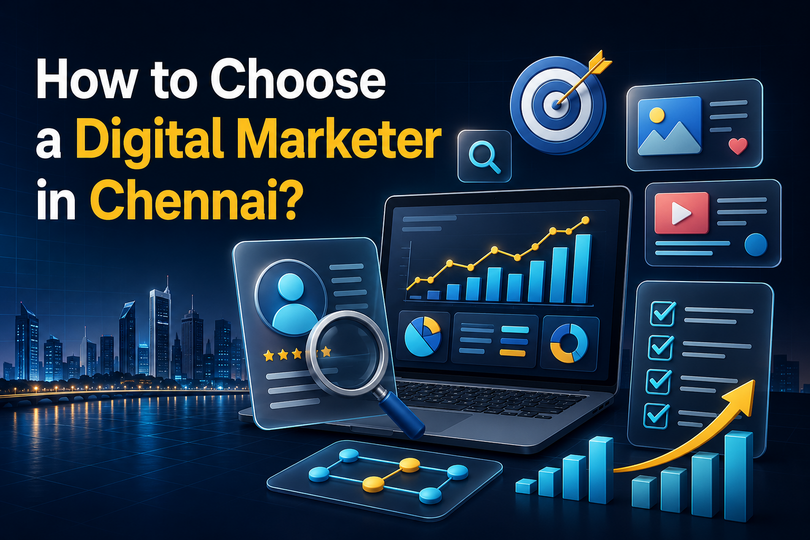
Choosing a digital marketer in Chennai begins with identifying your business goals. You should then examine the marketer’s skills, portfolio, industry understanding, pricing, and communication style. The right professional should understand your audience, recommend suitable marketing channels, and clearly explain how progress will be measured.
Here is a step-by-step guide to help you make the right choice.
Step 1: Identify Your Business Goals
Before contacting a digital marketer, decide what you want to achieve.
Your main goal could be to:
• Increase awareness of your business.
• Improve your visibility on Google.
• Attract more website visitors.
• Generate calls or WhatsApp inquiries.
• Get more appointment bookings.
• Increase product sales.
• Build a stronger social media presence.
• Create better photographs or videos.
Try to make your goal specific.
For example, “I want more customers” is a broad goal. A clearer goal would be:
“I want to generate more appointment inquiries from customers near my salon.”
A specific goal helps the marketer understand what your business needs. It also makes it easier to measure whether the marketing work is producing useful results.
Step 2: Understand the Main Areas of Digital Marketing
Digital marketing includes several services. You may not need all of them.
Understanding the main areas will help you choose a professional with the right skills.
Search Engine Optimization
Search engine optimization, or SEO, helps a website become more visible when people search for relevant information on Google and other search engines.
SEO may include:
• Keyword research.
• Website content improvement.
• Page titles and meta descriptions.
• Heading optimization.
• Internal linking.
Local SEO.
• Website speed and mobile usability.
• Helpful blog content.
For example, someone searching for a “digital marketer in Chennai” may want to compare local professionals or understand the services they provide. A useful page targeting this keyword should answer those questions clearly.
Social Media Marketing
Social media marketing helps businesses communicate with audiences through platforms such as Instagram, Facebook, LinkedIn, and YouTube.
It may include:
• Social media strategy.
• Content calendars.
• Reels and short videos.
• Captions.
• Graphics.
• Community engagement.
• Campaign planning.
• Performance reviews.
The best platform depends on your audience. A fashion brand may focus on Instagram, while a business-to-business company may find LinkedIn more useful.
Paid Advertising
Paid advertising allows businesses to promote their products or services through platforms such as Google Ads and Meta Ads.
A paid advertising marketer may handle:
• Campaign planning.
• Audience selection.
• Budget management.
• Advertisement creation.
• Landing-page recommendations.
• Performance tracking.
• Campaign testing and improvement.
Paid advertising can produce useful data quickly, but it requires a clear offer, suitable audience, and accurate tracking.
Content Creation
Content creation includes the materials used to attract, educate, and engage customers.
These materials may include:
• Blog articles.
• Social media posts.
• Photographs.
• Videos.
• Reels.
• Graphics.
• Website copy.
• Email content.
Good content should serve a purpose. It could answer a customer’s question, explain a service, demonstrate a product, or build trust in the brand.
Website Optimization
A business website should explain what the business offers and help visitors take the next step.
Website optimization may involve:
• Improving page structure.
• Making navigation easier.
• rewriting unclear content.
• Adding suitable calls to action.
• Improving mobile responsiveness.
• Creating service pages.
• Simplifying contact forms.
• Improving page speed.
A beautiful website is not enough if visitors cannot understand the offer or find the contact information.
Step 3: Decide What Type of Professional You Need
Once you understand your goals, decide whether you need a freelancer, specialist, agency, or in-house marketer.
Freelance Digital Marketer
A freelance digital marketer works independently and may offer one or more services.
A freelancer can be suitable for:
• Small businesses.
• Personal brands.
• New businesses.
• Short-term projects.
• Businesses that prefer direct communication.
However, one freelancer may not be able to manage SEO, social media, advertising, website development, photography, and video production at the same time.
Ask which tasks the person handles directly and whether any work will be outsourced.
Digital Marketing Specialist
A specialist focuses on a particular area, such as SEO, paid advertising, social media, or content creation.
Hiring a specialist can be useful when you already know what needs improvement.
For example, if your website performs well but your advertisements are not producing inquiries, you may need a paid advertising specialist rather than a complete digital marketing package.
Digital Marketing Agency
An agency usually has a team with different skills.
The team may include:
• SEO specialists.
• Social media managers.
• Content writers.
• Graphic designers.
• Advertising managers.
• Website developers.
• Video editors.
An agency may suit a business that needs several services together.
Before hiring one, ask who will manage your account. You should also find out how many clients that person handles and how often you will communicate.
In-House Digital Marketer
An in-house marketer works directly for your business.
This can be useful when your company requires daily content, frequent coordination, or a detailed understanding of internal activities.
However, one employee may still need support from outside specialists for website development, advanced advertising, design, or video production.
Step 4: Check Their Understanding of Your Industry
A marketer does not need years of experience in your exact industry. However, they should be willing to learn about your business, customers, products, and competitors.
Ask how they would approach marketing for your type of business.
Restaurants and Cafés
A restaurant or café may benefit from:
• Food photography.
• Short preparation videos.
• Customer reviews.
• Google Business Profile optimization.
• Location-based advertising.
• Updated menus.
• Clear reservation details.
The marketing should make it easy for nearby customers to discover the business and decide whether they want to visit.
Fashion and Beauty Businesses
Fashion and beauty brands often depend on strong visual presentation.
Their marketing may include:
• Product photography.
• Styling videos.
• Tutorials.
• Customer testimonials.
• Influencer collaborations.
• Product advertisements.
• Clear shopping pages.
The content should look attractive while still giving customers enough information to make a decision.
Clinics and Healthcare Businesses
Healthcare marketing should focus on accuracy, trust, and responsible communication.
Useful activities may include:
• Clear service pages.
• Educational content.
• Local SEO.
• Professional photographs.
• Simple appointment options.
• Accurate business information.
The marketer should avoid exaggerated medical claims or content that could mislead patients.
Educational Institutions
Educational businesses may require:
• Detailed course pages.
• Student-focused content.
• Clear eligibility information.
• Inquiry forms.
• Educational videos.
• Search and social media campaigns.
• Honest student experiences.
The goal should be to attract people who are genuinely interested in the course, not simply to collect a large number of low-quality leads.
Photographers and Creative Professionals
Creative professionals can use digital marketing to communicate their style and attract suitable clients.
Their strategy may include:
• A clear portfolio.
• Behind-the-scenes content.
• Client preparation tips.
• Service explanations.
• Local SEO.
• Testimonials.
• Simple booking information.
Strong visuals are important, but potential clients should also understand the services, process, and next steps.
Step 5: Review the Marketer’s Portfolio
A portfolio shows how a marketer applies their skills.
Look for examples such as:
• Website projects.
• Social media content.
• Blog articles.
• Campaign ideas.
• Advertisement creatives.
• Photographs.
• Videos.
• SEO-focused pages.
• Marketing plans.
Do not judge a portfolio only by its appearance.
Ask whether each project has a clear goal. Consider whether the content suits the intended audience and whether the marketer can explain the thinking behind the work.
Practice Projects Can Be Valuable
Beginners and early-career marketers may not have a long list of clients.
Their portfolios may include:
• Personal websites.
• Sample campaigns.
• Practice advertisements.
• Content calendars.
• Educational assignments.
• Self-directed video projects.
• Mock brand strategies.
These projects can still demonstrate creativity, technical ability, and marketing knowledge.
The important point is honesty. Practice work should not be presented as paid client work.
Do Not Focus Only on Follower Counts
A high follower count does not automatically show marketing ability.
An account may have many followers but receive few genuine inquiries. Another account may have a smaller but highly relevant audience.
When reviewing social media work, look at:
• Content quality.
• Audience relevance.
• Brand consistency.
• Customer engagement.
• Clarity of communication.
• The purpose behind each post.
Meaningful results matter more than popularity alone.
Step 6: Check Their SEO Knowledge
SEO may be important if customers use search engines to find your products or services.
A marketer working on SEO should understand:
• Search intent.
• Keyword research.
• Title tags.
• Meta descriptions.
• H1, H2, and H3 headings.
• Helpful content.
• Internal links.
• Image optimization.
• Local search.
• Mobile usability.
They should also understand that adding a keyword does not automatically improve rankings.
The content must answer the user’s question and provide a good experience.
Ask How Keywords Will Be Used
Keywords should be included naturally in relevant places.
The primary keyword may appear in the:
• Page title.
• Main heading.
• Introduction.
• Relevant subheadings.
• Body content.
• Meta description.
• Image alternative text, when appropriate.
Repeating the keyword too often can make the content difficult to read. It may also reduce the quality of the page.
Each page should have a clear topic and purpose.
Avoid Ranking Guarantees
No digital marketer can guarantee the first position on Google.
Search rankings depend on many factors, including:
• Competition.
• Website quality.
• Search intent.
• Content usefulness.
• Technical performance.
• Backlinks.
• Location.
• Search-engine changes.
A responsible marketer will explain what they can improve. They will not promise a result that is outside their full control.
Step 7: Evaluate Their Content Skills
Good content helps potential customers understand your business.
A marketer should know how to plan content around customer needs rather than filling a calendar with random posts.
Useful content may include:
• Answers to common questions.
• Product demonstrations.
• Service explanations.
• Customer stories.
• Educational tips.
• Behind-the-scenes content.
• Comparisons.
• Tutorials.
• Brand stories.
For example, a skincare clinic could explain common skin concerns. A café could show how a popular drink is prepared. A photographer could share tips for preparing for a portrait session.
Each piece of content should have a clear purpose.
Step 8: Consider Photography and Video Skills
Visual content is especially useful for businesses in fashion, food, beauty, fitness, hospitality, real estate, and personal branding.
Photography can help customers see product details, understand quality, and recognize the brand.
Video can show movement, demonstrate a service, explain a process, or tell a story.
A marketer who understands photography, videography, and editing may be able to use one content shoot across different channels.
For example, a product video could be adapted into:
• An Instagram reel.
• A paid advertisement.
• A website banner.
• A YouTube Short.
• A behind-the-scenes post.
Ask whether photography and video production are included in the service or charged separately.
Step 9: Ask About Paid Advertising
Paid advertisements can help businesses reach selected audiences. However, advertisements should not be launched without a clear goal.
Before hiring someone to manage advertising, ask:
1.What is the main campaign objective?
2.Who will see the advertisements?
3.Which platform will be used?
4.How will the budget be divided?
5.Who will create the advertisements?
6.Where will users go after clicking?
7.How will inquiries or sales be tracked?
8.How will the campaign be improved?
Clear answers show that the marketer is thinking about the full customer journey.
Understand Advertising Costs
Advertising spend and management fees are different.
Advertising spend is paid to platforms such as Google or Meta.
The management fee is paid to the professional who creates, monitors, and improves the campaign.
Ask for both amounts to be clearly shown in the proposal.
Your business should also have proper access to its advertising accounts and campaign data.
Step 10: Find Out How Results Will Be Measured
The right performance measurements depend on your goal.
For example:
• A clinic may track appointment inquiries.
• A restaurant may track calls or reservations.
• An online store may track purchases.
• A coaching institute may track qualified student leads.
• A service business may track contact-form submissions.
• A personal brand may track collaboration inquiries.
Likes, views, reach, and followers can provide useful information. However, they do not always show whether marketing is helping the business.
A reel with fewer views may be more valuable if it reaches the right audience and produces real inquiries.
Ask the marketer how often results will be reviewed and what changes will be made based on the data.
Step 11: Evaluate Their Communication Style
A marketer may have strong technical skills, but the working relationship can still become difficult if communication is poor.
During your first conversation, notice whether the marketer:
• Listens carefully.
• Asks useful questions.
• Understands your concerns.
• Explains ideas simply.
• Responds clearly.
• Sets realistic expectations.
• Admits when something is outside their expertise.
1.Good communication helps prevent confusion and delays.
2.Ask About Reports and Updates
3.Agree on how often you will receive updates.
A useful report should explain:
• What work was completed.
• What results were observed.
• What worked well.
• What needs improvement.
• What will happen next.
A report should not contain numbers without explaining what they mean for the business.
Step 12: Compare Pricing and Deliverables
Digital marketing costs vary depending on experience, project size, services, and workload.
Before agreeing to a project, request a clear scope of work.
It should explain:
• Services included.
• Number of deliverables.
• Content formats.
• Project duration.
• Approval process.
• Reporting schedule.
• Advertising budget.
• Extra charges.
• Payment terms.
Ownership of accounts and content.
Do not choose only based on the lowest price.
A low-cost package may contain work that does not support your goals. An expensive package may include services your business does not need.
Compare the relevance and quality of the proposed work.
Step 13: Start With a Small Project if Necessary
If you are unsure about a marketer, consider beginning with a limited project.
This could include:
• A website review.
• A one-month content plan.
• A small advertising campaign.
• An SEO audit.
• A short video project.
• A social media profile review.
• A single landing page.
A smaller project allows you to understand the person’s skills, communication, and working process before making a longer commitment.
Step 14: Watch for Warning Signs
Be cautious if a marketer:
• Guarantees the first position on Google.
• Promises instant sales.
• Suggests a strategy without studying your business.
• Avoids explaining fees.
• Cannot describe previous work clearly.
• Focuses only on followers and likes.
• Pressures you to sign immediately.
• Refuses to provide account access.
• Uses complicated language without explanation.
• Hides poor results behind unclear reports.
A trustworthy professional should communicate honestly about what is possible, what takes time, and what cannot be guaranteed.
Step 15: Ask the Right Questions
Before making a final decision, ask:
1.What information do you need about my business?
2.Who do you think my target audience is?
3.Which marketing channels would you recommend?
4.Why are those channels suitable?
5.What relevant work can you show me?
6.Which tasks will you handle personally?
7.How will you measure progress?
8.How often will we communicate?
9.What does the price include?
10.Is advertising spend charged separately?
11.What results are realistic?
12.Who will own the accounts, content, and campaign data?
The answers should help you understand whether the marketer is a suitable fit.
Frequently Asked Questions
How do I choose the right digital marketer in Chennai?
Start by identifying your business goals. Then compare marketers based on their skills, portfolio, industry understanding, communication, pricing, and approach to measuring results.
What services does a digital marketer provide?
A digital marketer may offer SEO, social media marketing, content creation, paid advertising, website optimization, email marketing, or performance tracking. The exact services depend on the person’s skills and experience.
Should I hire a freelancer or a digital marketing agency?
A freelancer may suit a small business or focused project that requires direct communication. An agency may be more appropriate when you need several services managed by a larger team.
Can a digital marketer guarantee first-page Google rankings?
No. Google rankings depend on competition, website quality, content, search intent, technical performance, and other factors. A reliable marketer should not guarantee a specific position.
How much does a digital marketer in Chennai charge?
The cost depends on the services, experience, workload, and project complexity. Ask for a detailed proposal showing the service fee, advertising budget, production expenses, and additional charges.
How long does digital marketing take to show results?
The timeline depends on the marketing channel. Paid advertising can provide early data, while SEO, audience building, and brand development usually need consistent work over a longer period.
Is social media marketing the same as digital marketing?
No. Social media marketing is one area of digital marketing. Digital marketing also includes SEO, websites, paid advertising, email, content creation, and analytics.
Can a beginner digital marketer be a good choice?
Yes, depending on the project. Review their portfolio, define the work clearly, and make sure they are honest about their experience and current abilities.
Why is local knowledge helpful?
A professional familiar with Chennai may better understand local audiences, neighbourhoods, cultural preferences, language choices, and location-based marketing opportunities.
What should a digital marketing proposal include?
A proposal should explain the services, deliverables, timeline, pricing, reporting process, responsibilities, additional costs, and ownership of accounts and content.
Conclusion
Choosing a digital marketer in Chennai becomes easier when you follow a clear process.
Begin with your goals. Decide which services you need. Review relevant work, ask practical questions, and make sure the pricing and responsibilities are clear.
The right choice could be a freelancer, specialist, agency, or emerging professional. What matters most is finding someone who understands your business, communicates honestly, and recommends a strategy that fits your audience and goals.